Thursday, June 21, 2012

Prometheus-ul lui Ridley Scott


PROMETHEUS (2012) ȘI REVENIREA
 LUI RIDLEY SCOTT LA GENUL S.F.
Critică în dialog
de Alex Stănescu și Pr. Daniil Iacșa


Următorul review este scris sub forma unui dialog pe e-mail. Deși transcris aici sub o formă unitară, articolul mai păstrează adresarea personală și dinamica genului epistolar. Alex Stănescu este regizor, editor și critic de film; opiniile sale pot fi consultate pe blogul personal: http://cinekis.blogspot.ro/ . Pr. Daniil Iacșa slujește la Biserica „Sf. Ștefan – Cuibul cu Barză din București” și este realizator Trinitas TV.


Prometheus: joaca de-a creația (Alex Stănescu)

           Filmul e un horror ambiţios, care înghesuie foarte multe mituri şi concepte grele sub o carcasă SF impecabilă.Trimite încă din titlu la titanul care a dăruit omenirii focul, cheie spre cunoaştere şi civilizaţie, iar concluzia filmului se apropie de cea a mitului grecesc. La capătul drumului spre cunoaştere poate apărea suferinţa şi groaza, atunci când lipseşte smerenia şi chiar frica în faţa adevărurilor de nepătruns.
           Premiza rămâne copilărească, nevoia de a pune creaţia umanităţii în cârca unei seminţii extraterestre este deja fumată, dar intrând în joc doar de dragul cinematografului, remarcăm cum prezenţa lui Dumnezeu-Creatorul nu este cu totul ignorată (ca în alte producţii de gen). O serie de detalii presărate de-a lungul naraţiunii semnifică discret: crucea tatuată pe umărul unui personaj, crucea de la gâtul eroinei, care este scoasă de robot sub pretextul "decontaminării", de parcă acel obiect ar fi fost predispus unei contaminări malefice mai degrabă decât corpurile celor din echipaj.
Ridley Scott este un talent confirmat când vine vorba de imagini uimitoare, iar apetenţa pentru "estetica urâtului" îi este la fel de notorie.
           Distribuţia e inegală (Noomi Rapace e fenomenală, Charlize e penală), asemenea ritmului, rupt după prima jumătate a filmului - lentă, meditativă - cu o cascadă a efectelor speciale. Bestiarul aminteşte de Alien, SF-ul cu care Scott s-a "lansat pe orbită". Arătările decimează în câteva minute jumătate din echipaj.
           Nu se poate spune că PROMETHEUS aduce noutăţi, este mai degrabă o întoarcere spre tinereţea regizorului. El dovedeşte că şi-a conservat vitalitatea mai bine decât bătrânul din film, gata să cheltuiască trilioane de dolari şi să străbată ani lumină în căutarea vieţii fără sfârşit.
           Din multele întrebări nerăspunse, cea legată de motivul pentru care extratereştrii palizi i-ar fi creat pe oameni iese în evidenţă. Într-un moment-cheie al filmului, androidul (jucat de Michael Fassbender) face o comparaţie între "facerea" oamenilor şi construirea androizilor, proiectaţi de oameni. Concluzia poate fi că oamenii au fost creaţi dintr-un moft şi trebuie distruşi din acelaşi motiv?


Istorie, mituri și simboluri oculte în Prometheus (Pr. Daniil Iacșa)

           Sunt de acord că Prometheus este un spectacol ce se dorește a răpi, mai degrabă decat a transpune privitorul în realitatea alternativaă a poveștii. Cu Prometheus, Ridley Scott se reinventează din nou pe sine, rămâne tânar, așa cum spuneai tu; ceea ce a făcut cu Alien face și cu Prometheus, își up-dateaza la cultura populară a anului 2012 repertoriul tehnic, de exprimare și comunicare a scenariului.
           Și totuși, ce e atât de nepotrivit la acest film? Ce e sumbru si bizar în povestea urzită măiestru în fața spectatorului? Este adevărat, există în istoria umanității lucruri la care istoriografia academică nu are răspuns, există mărturiile civilizațiilor amerindiene, olmecă, mayașă și altele. În cartea sa Fingerprints of the Gods, Graham Hancock scrie printre altele, referindu-se la mormântul regelui Pacal din Palenque pe care l-a cercetat personal:

"The scene carved on top of the sarcophagus showed a clean-shaven man
dressed in what lookedlike a tight-fitting body-suit, the sleeves and leggings
of which weregathered into elaborate cuffs at the wrists and ankles.
The man lay semireclined in a bucket seat which supported his lower
back and thighs, the  nape of his neck resting comfortably against some
kind of headrest, and he was peering forward intently. His hands seemed
to be in motion, as though they were operating levers and controls, and
his feet were bare, tucked up loosely in front of him.
Was this supposed to be Pacal, the Maya king?
If so, why was he shown operating some kind of machine? The Maya
weren’t supposed to have had machines. They weren’t even supposed to
have discovered the wheel. Yet with its side panels, rivets, tubes and
other gadgets, the structure Pacal reclined in resembled a technological
device much more strongly than it did ‘the transition of one man’s living
soul to the realms of the dead’, as one authority claimed, or the king
‘falling back into the fleshless jaws of the earth monster’, as another
argued." (p. 154)

           În mod evident, există o asemănare izbitoare între regele Pacal descris de Hancock și acel Engineer din film așezat în scaunul de pe platforma navei spațiale extraterestre. La fel, capul gigantic pe care l-au întâlnit oamenii acolo face referire la capetele uriașe de oameni cu trăsături negroide aparținând civilizației olmece, despre care se știe foarte puțin, artefacte găsite în Mexic. Hancock scrie și despre ele. Făcând referință și la descoperirea acestor capete în anii 1930 de către un arheolog american, el descrie ce a văzut și îl citează și pe american:

 "Lying close to the calendar stela at Tres Zapotes, Stirling also unearthed
a giant head. I sat in front of that head now. Dated to around 100 BC, it
was approximately six feet high, 18 feet in circumference and weighed
over 10 tons. Like its counterpart in Santiago Tuxtla, it was unmistakably
the head of an African man wearing a close-fitting helmet with long chinstraps.
The lobes of the ears were pierced by plugs; the pronounced
negroid features were furrowed by deep frown lines on either side of the
nose, and the entire face was concentrated forwards above thick, downcurving
lips. The eyes were open and watchful, almond-shaped and cold.
Beneath the curious helmet, the heavy brows appeared beetling and angry.
Stirling was amazed by this discovery and reported:
The head was a head only, carved from a single massive block of basalt, and it
rested on a prepared foundation of unworked slabs of stone ... Cleared of the
surrounding earth it presented an awe-inspiring spectacle. Despite its great size
the workmanship is delicate and sure, the proportions perfect. Unique in character
among aboriginal American sculptures, it is remarkable for its realistic treatment.
The features are bold and amazingly negroid in character ...
"
(p. 125)

           După cum se vede, aceste descoperiri și lucruri inexplicabile din trecutul îndepărtat al umanității sunt sursa ideilor prezentate în acest film. Numai că ele sunt îmbrăcate în ideologia "ancient aliens", după numele show-ului de televiziune, adică prezentarea extratereștrilor umanoizi ca creatori și dumnezei ai oamenilor, de altfel o idee preluată și dezvoltată de la elvețianul Erich von Däniken.
           De unde incompatibilitatea acestei viziuni despre istoria umană cu creștinismul? Problema nu este că creștinismul răsăritean respinge din principiu și suspectează ori demonizează orice fel de fapte istorice pe care nu le poate explica, ci că astfel de căutari și interpretări sunt, sec spus, anticreștine. Filmul rămâne în planul realității materiale, fără nici un fel de referință la spiritualitate. La religie da, dar se știe că religiile seculare nu au spiritualitate, la fel cum există și spiritualitate fără religie (New-Age-ismul). Am văzut în Prometheus omul pretins superior, dar desfigurat și dezumanizat. Nu umanitatea lipsește neapărat - rămân umani câțiva membri ai echipajului, iar pe final chiar androidul se umanizează - ci acea umanitate recuperată de Hristosul creștin, acea umanitate spiritualizată, îndumnezeită, sfințită și theomorfizată, teandrică și theocentrică, diafană și fragilă, deopotrivă optimistă și ineluctabilă. În ochii umanității întruchipate de Elizabeth și deziluzionate de așteptările ei civilizaționale se citește groaza și disperarea, urmate de pretinsa maturizare prometeică. Din nou, terenul de joacă pentru categoria hidosului este persoana umană, sub aspectul ei material, adica trupul, care poate fi ciopârțit în fel și chip și batjocorit de "altoirea" altor specii demonice. Așa dupa cum observai tu, aleatoriul, arbitrariul si iraționalul predomină ca viziune într-un astfel de film. Ce mai contează întrebarea Elizabethei: "Who created/made them?" Deșertificarea sufletului uman, atât de bine metaforizată de Scott în ultimul act, este rezultatul oricărei simbioze cu ceea ce în limbaj convențional se numește: răul. Suntem în plin darwinism, dincolo de artă și cinematografie.
           Ridley Scott spunea că a dorit să pună doar câteva întrebări ce au trecut "de curând" (!) prin capul fiecăruia dintre noi. Numai că și eu mă întreb și sunt curios cine a creat acele minunate construcții gigantice din Asia, via Egipt până în America Latină. Și eu sunt fascinat de precizia anului (solar) maya, mai corect chiar decât cel din calendarul gregorian (preluat și de noi, creștinii ortodocși români, spre deosebire de ruși, spre exemplu, care au rămas pe "stilul vechi"), de faptul că au fost descoperite date mayașe, inscripționate în piatră ce trimit la zile precise de acum 90 sau chiar 300 de milioane de ani - în Quiriga, Guatemala (Hancock). Și eu pot să cred că lumea noastră și existența oamenilor pe pământ depășește 15.000 de ani. Dar pentru nici o clipă nu pot să cred că altcineva în afară de Dumnezeu ne-a creat. În ideologia ilustrată de acest film, Întruparea lui Hristos își pierde orice sens. "Lumea nouă", inaugurată de creștinism, cu evenimentele și personajele ei providențiale (prooroci, apostoli, sfinți, asceți, martiri), noua cronologie/"mitologie" creștină, regândirea timpului și a umanității însăși prin jertfa pe cruce a Creatorului nostru pentru noi este transformată în absurd de povestea din film.
           Și aici ajungem la ceva important. Cred că ficțiunea, scenariul, story-ul, se propune ca fiind mai mult decât "o altă poveste SF". Sigur, toate marile titluri clasice ale literaturii genului SF au născut la timpul lor surpriza și dezbaterea publică: "Omul invizibil", "Mașina timpului" și "Războiul lumilor" ale lui Wells, romanele lui Jules Verne sau Herbert (Dune), dar nici unul nu se impune cu atâta "seriozitate" din partea autorilor lor precum Prometheus. Ne miram deunăzi despre cum au putut unii adolescenți să se sinucidă pentru că lumea din Avatar nu există în realitate. Cu aceasta Avatarul îmi devenea de asemenea antipatic, dar acum îmi dau seama că acolo povestea rămâne poveste, se operează cu categorii morale, cu binele, răul, firul narativ este bine dezvoltat și chiar ideologia ecologismului și a feminismului, environmentalism-ului și celelalte apar mai prietenești și mai firești decât ce se întâmplă în Prometheus. Oricum, cele două filme au în comun fuga de uman, de această formă și posibilitate de expresie a persoanei umane cu care ne-a înzestrat Dumnezeu.
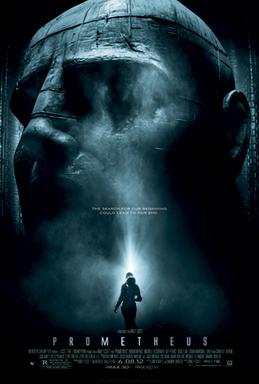
           Mi se pare evident ca mitul prometeic a fost îmbrățișat total de ideologia masonică și cea a ocultismului, ce propun amândouă emanciparea omului, iluminarea lui din întunericul religiei (creștine). Despre asta e vorba, de fapt. Despre cum filmul este presărat de către Ridley Scott cu simboluri și teme masonice. Astfel, avem mitul lui Prometeu, reduplicat în mod ingenios pe tot parcursul filmului în rebeliunea rasei extraterestre sau a unui reprezentant al ei (vezi începutul filmului) față de una superioară lor prin crearea omului, om care creează la rândul său androizi. Fiecare creație se răzvratește și devine tot la fel de iluminată precum creatorul ei. Parcă Scott ar vrea să ne spună că nu putem scăpa acestui destin, că prometeicul e de fapt condiția umană înscrisă genetic în portretul nostru ancestral. Avem și mitul neognostic - de acum masonic - al iluminării, al cunoașterii autonome și eliberatoare, care să ne propage până la marginile universului fizic. Vorbim despre o devorare a câmpului cunoașterii fizice, materiale, limitate la acest tărâm despre care creștinismul spune că nu e totul. Nu despre o cunoaștere spirituală în sensul creștin. Pentru a ilustra cât mai fidel acest mit și pentru a plăti un tribut ideilor masonice specifice, simbolul cunoașterii masonice, respectiv capul, este prezentat de mai multe ori pe parcursul filmului. Sub pretextul referinței la capetele olmece și nu numai, în general antice, cum ar fi cele din Insula Paștelui sau chiar capul Sfinxului, în film apare acel cap uriaș din piatră reprezentat și pe afișul filmului. La sfârșit apare androidul David decapitat, dar care își păstrează funcționalitatea, "viața", sub forma capului său. Chiar dacă unii vor spune poate că vorbitorul cap este o referință internă a lui Scott la alt mare film SF al său, Alien, și la androidul de acolo, totuși capul cunoscător și înțelept rămâne un simbol masonic împletit cu un altul: femeia puternica și salvatoare ce controlează capul prin voința și farmecul său. În film acest lucru se desfașoară prin salvarea și manevrarea capului lui David de către Elizabeth în scena finală. Un alt mit este cel al căutarii vieții/tinereții veșnice, din nou, viata așa cum o înțelegem și percepem noi în această lume. Poveștile noastre românești, dar și cele universale, cum ar fi Epopeea lui Ghilgameș, vorbesc despre acest mit. Dar asta o face și Mircea Eliade, lucru care îmi amintește de filmul tău "Clipa asta minunata" unde se reia prin grila eliadiană motivul căutarii timpului pierdut. Viața veșnică prin băutul apei vii i-a promis-o până și Hristos femeii samarinence la puțul lui Iacov. Dar nu în sensul în care înțelesese acest lucru femeia – și o dată cu ea, iată, o întreagă modernitate secularizată – ci în sensul împărtășirii de apă/viață în Duhul Sfânt. "Cel ce crede în Mine, precum a zis Scriptura: râuri de apă vie - adică de Duh Sfânt, n.m. - vor curge din pântecele lui", spune Hristos la In 7:38. Bineînțeles, în film viața eternă este cautată pătimaș, egoist și limitativ-spațial.
           În final cred că rămâne o singură întrebare importantă: ce e cu filmul acesta? În ce context se înscrie el? Pe cine pregătește sau "educă", așa cum spunea Scott într-un interviu? Și mai ales, ce urmează după un astfel de film - nu cu producătorii, ci cu publicul, cu omul simplu, atât de necunoscător încât să trebuiască a fi "iluminat" de o astfel de teorie? Câtă popularizare și impact va avea un astfel de film – ce-i propune pe „ancient aliens” ca creatori-demiurgi-prometei ai noștri – pentru pregătirea unei conștiințe anti-creștine?
           Am fost dezamăgit de Ridley Scott pe care l-am crezut un artist genial și nonconformist, dar nu și înregimentat ideologic. Nu îl judec și nici nu îl demonizez. Omul este tributar până la urmă și culturii sale, o cultură occidentală ce din păcate nu a cunoscut sau asimilat în vreun fel creștinismul răsăritean. Rămâne același mare artist, dar parcă puțin mai mic și periculos pentru o conștiință creștină nepregătită pentru o astfel de vrajă.


O posibilă cheie creștină a filmului (Alex Stănescu)

           Din ce ai spus până acum reiese că Ridley Scott nu trimite deloc la spiritualitatea creştină. Eu mă încăpăţânez să-l salvez din „infernul masonic”, invocând acele detalii de cruci care apar în film.
Am scris deja despre ele, repet: după ce androidul (care îmi apare diabolic în cea mai mare parte a filmului, mai puţin spre final) scoate crucifixul de la gâtul lui Noomi, filmul intră într-o nouă fază.
Androidul îl infestează pe iubitul lui Noomi (îi picură în şampanie, cu viclenie, din substanţa aia prelevată de pe containerele extraterestre), care o impregnează pe ea cu "fătul" monstruos, făt care la rând-i îl va devora pe umanoidul palid la final! Groaza se prăvăleşte nestăvilită asupra personajelor din momentul în care acestea pierd protecţia (infimă, dar prezentă până atunci) a lui Dumnezeu. Dacă îţi aminteşti, Noomi vorbeşte la un moment dat cu iubitul ei despre creaţie şi Dumnezeu. El este omul de ştiinţă desacralizat, dar nu întru totul ateizat, ea mai păstrează ceva din credinţă, sub forma crucii de la gât. Poate că de aceea este şi singurul personaj uman care rămâne în viaţă la sfârşit? Este o altă cheie de interpretare a filmului care merită analizată.


Referințele „creștine” din Prometheus (Pr. Daniil Iacșa)


           Îmi dau seama că vorbind despre Prometheus de pe banca teologului, așa cum o fac eu, risc să devin ridicol pentru cei care consideră orice critică din perspectivă creștină a unui produs cultural ca deplasată, bigamă și jenantă... Dar când a fost vreodată comodă critica moravurilor?
           Creștinismul este perceput astăzi ca reacționar de către ideologia atee a political-correctness-ului prin prisma unor clișee devenite clasice în limbajul de referință ateu. De la Celsus încoace - acest Voltaire al sec. II - creștinismul e văzut ca religia ce sleiește de orice ferment arta și cultura umanității. Creștinii au fost acuzați că prin ruptura de cultura păgână au distrus spiritul și originea artei europene. A exprimat acest lucru cel mai plastic Cioran în multe din scrierile sale, deși personal cred că toate afirmațiile sale cu privire la creștinism trebuie privite cu rezerva teribilismului ce îl caracteriza și cu dubla măsură ce a aplicat-o acestei religii, lucru ce reiese din lectura Caietelor sale. Cu siguranță, aversiunea Părinților Bisericii față de teatrul antic, filosofia, scrierile și sculptura greco-romană alături de interzicerea oricărui cult păgân de către Împăratul Teodosie I în 391 au contribuit din plin la această prejudecată. Dar nu un moralist vreau eu să fiu aici și nici un aprig stigmatizator al Prometheus-ului. Cred, în schimb, că în jocul acesta al cinematografiei adevărul este de multe ori format și deformat precum o bucată de plastilină în mâna unui artist priceput. Ideile care dau viață scenariului se împletesc cu ideile regizorului și acestea stau în spatele mesajului real al filmului. Într-un carusel al comparațiilor nebune, să ne imaginăm cum ar arăta Patimile lui Hristos realizat de James Cameron, Steven Spielberg sau Woody Allen... Sursa trebuie că rămâne Noul Testament, dar mesajul va fi altul, nu-i așa?
           Tot astfel se întâmplă și în cazul acestui film atunci când apar referințele creștine. Crucea, cea despre care spui că imprimă o altă cheie de interpretare, este folosită în mod precis pentru a declanșa în mentalul spectatorului acele reflexe și trimiteri la capitolul „exorcisme” din cadrul istoriei cinematografiei. Vorbim despre o programare neuro-lingvistică (NLP), un subliminal al greței omului occidental față de patologia fanaticului religios, dar mai ales creștin, și o declanșare pe moment a sentimentului de frică. Supranaturalul este asociat astfel cu frica, el trebuie să declanșeze spaima imediată și irațională în spectator, alături de o așteptare a cascadei de evenimente horror. Nu cred că crucea este elementul de speranță în film, ea nu e folosită în sens spiritual, ci superstițios. Ea nu mai este simbolul jertfei lui Hristos pentru oameni, ci totemul ce reprezintă în film grupul creștinilor. Din spiritual și eshatologic, crucea eroinei te aruncă în concret. Joaca cu crucea este pur teatrală în opinia mea.
           Apariția crucilor și faptul că Elizabeth vorbește despre creație și Dumnezeu nu înseamnă că filmul este mai puțin anticreștin. Putem vedea în folosirea simbolului crucii și a replicii "Who created/made them?" o pârghie pentru o continuare a filmului, așa cum s-a exprimat cu nerăbdare Ridley Scott. Și de asemenea mai putem vedea o corelație cu nenumăratele cruci reprezentate în monumentele antice din America Latină. Recurg din nou la Graham Hancock care spune în Fingerprints of the Gods:

Equally thought-provoking was the appearance of the symbol of the
cross on many of these ancient blocks. Recurring again and again,
particularly at the northern approach to Puma Punku, this symbol always
took the same form: a double crucifix with pure clean lines, perfectly
balanced and harmonious, deeply recessed into the hard grey stone. Even
according to orthodox historical chronology these crosses were not less
than 1500 years old. In other words, they had been carved here, by a
people with absolutely no knowledge of Christianity, a full millennium
before the arrival of the first Spanish missionaries on the Altiplano. (p. 93)

           La Uxmal, în Yucatan, Hancock descoperă multe alte cruci:

Oddly, although the Pyramid of the
Magician had been built long centuries before the Conquest, the symbol
most frequently featured in these mosaics was a close approximation of
the Christian cross. Indeed there were two distinct kinds of ‘Christian’
crosses: one the wide-pawed croix-patte favoured by the Knights Templar
and other crusading orders in the twelfth and thirteenth centuries; the
other the x-shaped Saint Andrew’s cross. (...)
I took a rest on the high platform that surrounded the chamber. From
here, looking down, I could see many more crosses. They were
everywhere, literally all over this bizarre and ancient structure. I
remembered the Andean city of Tiahuanaco and the crosses that had
been carved there, in distant pre-Colombian times, on some of the great
blocks of stone lying scattered around the building known as Puma
Punku.14 ‘Man in Snake’, the Olmec sculpture from La Venta, had also
been engraved with two Saint Andrew’s crosses long before the birth of
Christ. And now, here at the Pyramid of the Magician in the Mayan site of
Uxmal, I was confronted by crosses yet again. (p. 156-7)

           Bineînțeles, Hancock trage niște concluzii amețitoare, cum că creștinii ar fi preluat simbolul crucii de la civilizațiile străvechi. Dar ce vreau să spun cu aceste exemple este că probabil Scott a vrut și aici să aducă în prim plan sursa istorică a monumentelor misterioase și să facă el singur legătura între crucea creștină și cea păgână. Nu mai puțin adevărat este că una dintre interpretările posibile din film cu privire la inexplicabila „înghețare” a extratereștrilor în urma atacului asupra lor de acum 2000 și ceva de ani - ipoteză expusă de cineva pe forumurile de pe imdb.com, care îl cita și pe Scott cu o aluzie în acest sens - este că acum 2000 de ani noi, oamenii, am omorât/răstignit pe cineva de-al lor, adică pe Iisus. Din acest motiv ar fi fost supărați alienii pe oameni și ar fi dorit distrugerea noastră. Doamne, iartă-ne de o asemenea blasfemie!
           Cu privire la ideea latentă a filmului, a unui Creator sau Designer inițial, care să-i fi creat și pe așa-zișii creatori ai oamenilor, trebuie spus că deismul nu trebuie confundat cu creștinismul. Multe dintre marile figuri ale culturii universale care au aparținut masoneriei nu au fost atee, ci deiste. Un exemplu în acest sens îl constituie Voltaire, care nu era ateu, ci credea în existența unui creator. De altfel, în timpul său, masoneria franceză mai era încă divizată cu privire la primirea deiștilor în rândurile sale. Pe șorțul primit în dar de Voltaire cu prilejul inițierii sale din 1778, cu puțin timp înainte de a muri, șorț pe care l-a și sărutat cu evlavie, apare soarele și luna, pământul/ochi și alte simboluri care trimit la ideea unui creator/demiurg. Așa că este posibil ca și Scott să fie mai degrabă un deist, iar nu un ateu, un deist care să aibă credința sa personală, vag iudeo-creștină, cu privire la omul creat și destinul său.
           Spui despre personajul Elizabeth că este „omul de ştiinţă desacralizat, dar nu întru totul ateizat, ea mai păstrează ceva din credinţă, sub forma crucii de la gât” și că acesta ar fi fost motivul pentru care a rămas în viață până la sfârșit... Mie mi se pare în schimb că ea este prezentată în film ca simbolul răsturnat al feminității sacre, al mamei avortoare și al Gaiei, spiritul pământului din mitologia greacă. Gnosticismul, Wicca, Astrologia, New Age și Masoneria folosesc toate femeia ca reprezentând Gaia opusă cerului și patriarhatului religiei creștine. Femeia înțeleaptă, puternică și subversivă este cea care cucerește, subjugă și conduce masculinul. În film, Elizabeth este Pământul întreg care luptă pentru supraviețuire și câștigă. Deși impresionantă și puternică prin frumusețea ei, această imagine rămâne aproape nedescifrată pentru spectatorul obișnuit.
           Nu știu, prin urmare, ce rămâne din speranța noastră că poate exista ceva creștin în acest film.

Saturday, June 2, 2012

Saint John “the New” from Suceava


Saint John “the New” of Suceava was born around 1300 in Trebizond, being well educated according to the Christian model of virtues and faith. At the age of maturity he was engaged in commercial business, mostly on the banks of the Black Sea, where together with the merchandise handle he used to preach the Christian faith. During these travels he made not only friends, but also enemies. One of them, named Reitz (of Germanic ancestry, from Vienna) was seeking for an unknown reason to revenge on John. In a moment than both of them were in the port of Cetatea Albă (“White City”), situated at the entrance of the River Dniester in the Black Sea, - then occupied by the Nogai Tatars – Reitz send a message to the governor of the city, according to which, John would like to accept the faith of the Tatars. The synaxarion doesn’t mention that the Tatars would have been Muslims, and according to the troparion (hymn of the saint), these would have been Persians, that is Zoroastrians, or adepts to an astral religion. I would rather believe that this was the ancient religion of the Mongolic Tribes, because in the middle of it was the cult to the blue sky. Anyway, the governor was happy for the supposed wish of John and invited him to his court. The saint realized then the situation that will be happening, if he refused to change his faith. Despite of the imminent death, he remained Christian. He addressed to the governor: “Oh, mighty Governor, these words that have been said about me are false and simple temptations. I do not want to despise the kindness that you have showed to me, but I cannot deny Christ, the Light of the world”. The governor became angry and considered John’s words as insults against the Tatars’ faith, so he ordered John to be subjected to some terrible tortures.
Under the torture, John has strengthened his faith and his face was bright, beyond the normalness. After a while, the governor promised him that in change of his conversion, he will become the best medical care, in order to be healed, but John replied: “Don’t care for the wounds of my body, for through the perishable I wish to acquire the imperishable, and only the one who endures to the end shall be saved”. The stubbornness of John angered the governor even more, and he commanded that the “unfaithful” to be bound on the tail of a horse and dragged on the pavement of the city. Although he was strongly hurt, he prayed incessantly to God, and that prompted one of torturers to cut his head with the sword.
The governor didn’t allow the Christians to take his body from the road and bury him. But a Tatar from the City had a vision in which some men in golden clothes were officiating the funeral service to John. He thought that the Christian priests disrespected the order of the governor, so he took the bow and an arrow and tried to shoot them, but then his hands remained stuck on the bow and he was delivered only after he confessed what he intended to do. These miracles scared the head of the city, which has allowed the Christians to stand up John's body and bury him after the customs, in the graveyard of the town.
It appears that Reiz decided to dig up and profaned the grave, or according to the synaxary, he wanted to take the already wonderworker body of the saint in his country, which seems improbable to me, but he was discovered by the Christians in the city, who in this way discovered the incorrupt  body of the new martyr.

The Veneration of the Relics
The Life of Saint John the New appears to be with nothing more spectacular than of any other martyr. But the history of his relics reflects the entire history of the Principality of Moldova, which in the same manner as its sister Romanian Pricipates (Wallachia and Transylvania) had a very hard situation in the Middle Ages, being a theatre of conflicts between the neighbors.
 The relics of Saint John remained in a church in Cetatea Alba about 70 years, and his popularity among the pilgrims grew up to a moment when the owners of the city were the Moldavians. At the beginning of the 15th century the Voivode Alexander the Good of Moldova hears also about the miracles made at his coffin. In that period Moldova obtained from the seat of Constantinople the right to organize itself as an autonom Church, having its own metropolitan of Moldavian ancestry, namely Joseph Muşat. Following to this change of the church organization, the Voivod wanted the metropolitan seat to coincide with the capital city of Moldova, which was at that time at Suceava, today in the northern part of Romania.  Also the Voivod Alexander ordered that the holy relics of the saint to be moved in Suceava, in order to grow the prestige of his city. That happened in 1402, when the voivodal cortege met the procession with the relics in a place named Poiana Vlădicăi („The Bishop’s Glade”), near Iaşi.   The cortege accompanied the relics  about 100 kilometers up to Suceava, which remained in a church named Mirăuţi until 1589, when they were moved to the new cathedral in Suceava - dedicated to St. George.  
Voivod Alexander meeting the Cortege with the Relics
The tradition registered some miracles performed by the relics of Saint John the New and one of them is mentioned by Peter Movilă, the metropolitan in of Kiev. On June 2, 1622 Suceava was threatened to be overrun by the Tatars, and the people was obliged to refuge in some other towns. At that time, the priests wanted to take the shrine inside the fortress of Suceava (the church where they were housed being outside the walls), but they couldn’t pick them up. So they prayed to the saint to protect them and a heavy rain started suddenly and prevented the Tatars to siege to the city.
The relics remained here until 1686, when the army of the King Jan Sobieski of Poland entered in Moldova. Being beaten by the Turks, in retirement, the Poles took as a hostage the Metropolitan Saint Dosoftei, and because he was afraid of the robbery the Turks could do, he took with him the relics of Saint John the New in Jolkiew, where the Metropolitan died in 1693. The Relics remained here until 1783, when the bishop of Radauti, Dosoftei Herescu, managed to bring them back home, in the restored cathedral dedicated to St. George. Their arrival was possible because at that time the northern part of Moldova (Bucovina), with the city of Suceava, and the southern part of Poland were incorporated into the Austrian Empire. A new resettlement took place during their World War, when they were taken to Vienna in the Romanian Orthodox chapel, but in 1918 they were brought back.
Saint  John the New was considered for many centuries the protector of the entire country of Moldova. But because of the political changes, Suceava being occupied by the Austrians, he “lost” gradually his popularity in favor of Saint Parasceve. Her saint Relics were brought in 1641 by the Voivod Vasile Lupu in Iaşi, the new capital of the country, and her cult grew, so that even today millions of pilgrims come at her shrine in her celebration day, in October 12. She is now known as the “Protector of Moldova”.

Saint John the New in the iconography
The scenes of the Passion of St. John the New were represented in the painting of many churches in Moldova. His face appears for the first time in the church narthex from Dobrovăţ, near Iasi, in 1529. A few years later, in 1546, his life and martyrdom were portrayed in 12 scenes, on the south wall of the monastery church Voronet, founded by the Saint Voivod Stephen III the Great and similar scenes appear in the paintings of the Cathedral of Roman. Finally, at the monastery church Suceviţa appear 14 scenes of his life and passion, and also at the monasteries of Neamţ and Secu.
The Maryrium pf St. John the New. Fresco at Voronet


Hymn (Troparion) of the Saint
You have well governed your life on earth, working charity and incessantly praying with tears, you who suffered passions with courage, rebuking the Persian unfaith. Therefore you made yourself strength for the Church and praise for the Christians, oh John, you shall ever be remembered.

Sunday, May 6, 2012

The Righteous Job


The righteous Job is an uncertain biblical person and according to this, he bears also an uncertain name, which seems not to be Jewish. Some scholars think that it may signify “opposite”. The saint has gained his popularity from the omonime biblical book, being a symbol of saintness and patience.
Job is also quoted in the Book of Ezechiel (14, 14-20) together with Noah and  Daniel, as a very saint man. Also the book of Ecclesiast (49, 9) mentions that he has always followed the paths of the righteousness, and the book of Tobias  (11, 12-15), also suggests that Job suffered a  lot and his story is notorious. The Epistle of Jacob (5, 11) mentions also the patience of Job, recommended to be followed by the Christians.

The Story about St. Job

The very life of Job is known exclusively from the poetical Old-Testament book which bears his name. From the first verse there is known that he lived in a land named Hus (or Uz), identified somewhere in northen Arabia, not far away from Palestine, eastern from the river of Jordan and the Dead Sea. He was a “pure and righteous man who feared God and turned away from evil. Seven sons and three daughters were born to him. His possessions included13 7,000 sheep, 3,000 camels, 500 yoke of oxen, and 500 female donkeys; in addition he had a very great household. Thus he was the greatest of all the people in the east” (Job 1,1-3). This prologue makes us thinking to the richness but also the righteousness of Abraham. The following verses of the book record indirectly that he was not a Jew, because he was offering sacrifices to God in another matter as the mozaic tradition. There is also told to us that his sons and daughters were faithful and philantropists as their father.
Job lost suddenly all that he had, after a dialogue between the devil and God, who tried the faith of this righteous. So in a short time all his sons and daughters died, because a house has fallen down on them, the cattle were killed by “a fire from God” but Job himself reacts incredibly: “then Job got up and tore his robe. He shaved his head, and then he threw himself down with his face to the ground. He said, “Naked I came from my mother’s womb, and naked I will return there. The Lord gives, and the Lord takes away. May the name of the Lord be blessed!” (1,20-21) Shortly after, “Satan went out from the presence of the Lord, and he afflicted Job with a malignant ulcer from the sole of his feet to the top of his head” (2,7), but the righteous man still didn’t loose his calm, despite of his wife’s urge to curse God and to die. He just stand on a pile of garbage, where he was found by three of his friends, Eliphaz the Temanite, Bildad the Shuhite, and Zophar the Naamathite, who met together to come to show sympathy for him and to console him.
Job has a long dialogue with his “friends” (chapters 3 to 41), on the theme of the theodicee, that is the origin of the pain in the world, putting questions about the God’s justice, sense of living, happiness and unhapinness.
Job begins to lament himself, curses the day of his own birth and asks himself why the life is given to the human beings, if they are meant to suffer. Of course, he doesn’t know that all his unhappiness is provoked by Satan, who was allowed by God to do whatever he wants, unless to take his life.
After lamenting, only 7 days later the three friends begin to speak with Job. Eliphaz is the first one who reproaches that his bad destiny is maybe provoked by his unrighteousness (chapters 4/5; 15; 22), and the other two friends, Bildad (chapter 8; 18; 25) and Zophar (chapter 11; 20) are also harsh with him, but Job defends himself everytime, showing that their accusations are without substance: he didn’t make any harm, from which he is accused. The accusations of his friends follow the traditional theology of the Old Israel, according to which God is good and righteous, he rewards the good deeds and punishes the bad ones. If Job was punished so harsh, that maybe because of a great (maybe a hidden) sin. The repeated dialogue between Job and his friends finishes, when the friends spend all their arguments, and Job still believes he is righteous: “So these three men refused to answer Job further, because he was righteous in his3 own eyes” (32,1). The position of Job is a very interesting one: he accepts the justice of God, though he doesnt’t understand it. But he dares to oppose this unright faith and makes use not of the virtue of humility, but of another one, called in Greek “parrhesia”, that is boldliness.
The attitude of Job is totally shocking for his interlocutors, who simply aren’t able to criticize him anymore. That is hard to believe that he convinced them of his righteousness, simply they refused to speak with him, thinking that they cannot change a thing in him. Then, a person, until that moment not mentioned, “because he was younger”, Elihu son of Barachel the Buzite became angry “on Job for justifying himself rather than God” (32,2) but also angry on the three friends. His four discourses show to Job that the justice of God is beyond the human knowledge and the divine wisdom mustn’t respond to the human questions. Elihu seems to be a kind of precursor of God’s himself speech.
Finally God himself reveals from a storm to Job and show his wisdom and power. He advices Job only to be humble, because he cannot change a thing in the whole world, if there’s not allowed from God. Finally job repents for his atitude towards God. His friends also offer sacrifices, in order to be forgiven by God, because of their false judgement.
The life of Job after this event is resumed in only a few verses (42, 11-17). He becomes rich again, receives from his wife seven sons and three daughters and he is able to see his nephews until the fourth generation, shortly he lived other 170 years and was even richer and full of virtues than before.
The judaic apocrypha called the Testament of Job describes more about his death, but the christian tradition received from all these stories the example of virtue and human faith for God. Several Churchfathers, like Clement of Rome (1st Letter to the Corinthians), Cyprian, Tertullian and others remind about him as an example of virtue to follow.

The veneration of the Righteous Job

The modern scholars tend to believe that Job is simply the main character of a poetical book. There’s hard to say if they are right. But the biblical mentions from the prophets and late writers of the Old and New Testament cited at the beginning of this article makes me to believe that Job was more than a simple person in a beautiful tale.
 The Spanish pilgrim Sylvia Aetheria (or Egeria), who traveled in Palestine, Edessa and Constantinople at the ending of the 4th century wrote in her journal about his stop at the grave of St. Job. According to her, in that time there was already a church built, somewhere in Carneas, at the borders between the Roman provinces of Arabia and Idumeea. Apparently the bishop of this town received a monk who told him about a dream. Following it, they carved in the land and found a cave, inside of which they found the grave of Job. So they have built a church on that place.
There are at least two other locations that claim to be the place of Job’s burial places, such as  Urfa (formerly Edessa) in southeastern Turkey or Jabal Qara near Salalah in southern Oman.
Tomb of Job in Oman
Additionally, the Druze community also maintains a tomb for the Prophet Job in the El-Chouf mountain district in Lebanon.
The Tomb of Job in Lebanon


Saint Job is venerated in the Western Church, and there are several churches built in his honour in Venice, Bologna and some hospitals and hospices from Belgium. The Roman Martyrology remembers him on 10th May. In the Eastern tradition, he is celebrated on 27 April in Ethiopia, 29 august in the Coptic Church, 22 May in the Church of Jerusalem and in the Calendar of saints of the Armenian Apostolic Church on August 30.  The Greek-speaking Churches (byzantine rite) celenrates him on 6 May. He is commemorated also as a patriarch by the Lutheran Church on May 9.

Troparion of the Saint


“Seeing the richness of the virtues of Job, the enemy of the righteous plotted to steal them; yet though he broke down the tower of his body, he could not steal the treasure of his spirit; for he who, having stripped me naked, took me captive found the soul of the blameless one fully armed. Wherefore, anticipating my need before the end, O Savior, deliver me from the deceiver and save me!’

Saint Irene the Martyr


There are some more saints with the name Irene in the calendar. One of them was the Emperess of Constantinople, the widow of Leon the 6th, who helped with the organization of the seventhe ecumenical council in Nicaea, where there was established the canonicity of the veneration of the icons, saints, relics and remains from the saint people.
Another saint Irene was a virgin saint who died as a martyr in a town somewhere at the eastern borders of the Roman Empire, maybe even in Persia, in the , beginning of the.... century.
There is no report about this saint martyr until the byzantine Menologion of Basil II (10th century), which consisted into the abbreviated lives of the saints from the whole year, but this story we will follow here.

Life

Saint Irene was the daughter of a local leader called Licinius (not to be confused with the persecutor emperor Licinius who ruled 308 to 324 together with emperor Constantine). Because of her beauty, her father locked her in a tower, together with some servants. She was converted to the Christian faith by St. Timothy, the disciple of St. Paul, and this fact situates her probably at the end of the 1st century-the beginning of the 2nd. Irene came into a conflict with her father after she destroyed the stone gods of her father, who became very angry and wanted to kill her. He ordered to his servants to bind her in order to be trampled by the wild horses, but instead one horse bit him and he died. After Irene’s prayer, he resurrected and repented. The menologies states that both Licinius and his wife converted, together with a very big group of saints (about 3000). After that, the new governor called Ampelianus tried to convince her to renounce to the Christian faith and finally decapitated her. There is no more information about her life or her martyrdom in this Synaxarium.
Another Vita, found in some western manuscripts gives us more information. The Codex Ottoboniano 22 is the most extended one. Here we find out that she lived in a town called Magedo, probably in Persia where her father was governor, and her name before her conversion was Penelope. In this story Ampellianus was the name of her tutor and teacher, who was teaching her for about 6 years, when she had a vision. In the tower where they were enclosed it came a dove bringing an olive branch and putting it on the table, after that an eagle, bringing a crown made of flowers, and finally a raven, who put a snake on the table. Ampellianus interpreted these signs as follows: the dove represents the ascetic purity, and the olive branch is the seal of baptism. The eagle symbolizes the victory, and raven who brought the snake meant trouble and suffering.
After this came St. Timothy and baptized her, and the story follows the paths already known. After the conversion, her father and her mother converted and baptized themselves, but also renounced of their social status and lived in that tower. Instead of Licinius came as governor a man called Sedechia, who obliged Irene to bring sacrifices to the local gods, and after her refusal, she was thrown in a den (cueva) with snakes, from which she survived. The synaxarium follows the precedent one and reminds about a second mass conversion, after this miracle (this time about 8 thousand persons). Irene survived to Sedechia, who was replaced by Sappor, his son, also a persecutor. She suffered during his rule, but she didn’t stop preaching the Gospel in some other towns, namely Magedon, her home, Callinicon, Constantina and Mesembria, as the medieval eastern manuscripts also add to the story. In every of these towns she suffered tortures, but she miraculously survived, converting again and again many people to the Christian faith, apparently because of the miracles occured with her. In Callinicon she suffered because of a governor called Numenau. Shortly after she was brought again in a trial in front of Sappor (this time, apparently he was already emperor), who oderered her killing in Mesembria. In a Romanian Synaxarium there is written that she was killed by Sappor and shortly she resurrected. This strange miracle convinced even the emperor to accept the Christanity. Strangely, shortly after that she lied down into a coffin and before dying again, she asked her tutor Ampellianus to close her inside. After four days he opened the coffin, but her body was no longer inside. Traditionally the story of her life was noted by Ampellianus.

Some problems about the strange biography

The hagiographic motive of the disappearance of the body occurs often together with the saints who made many miracles. I will note here that also the body of St. Virgin Mary wasn’t anymore in the coffin, when St. Thomas came from India and wanted to see her for a one last time. The same situation occurs to St. Symeon from Emessa, the fool for Christ (7th century), and to St. Andrew from Constantinople, also fool for Christ (10/11th century). This strange disappearance of the body may be a sign of the saintness, so that God took them also with their body in Paradise, though that is only a personal conclusion.

A very strange change occurs in the slavic live of the saint. Megedo is changed into “Macedonia”: so the saint lived not in the far East, but in the Balcanic peninsula. In that condition, Licinus is the same with the emperor Licinius from the 3rd century. Moreover, Mesembria already mentioned earlier as a town where she preached is the modern Bulgarian town of Nessebar, at the shore of the Black Sea. The problem of her conversion by St. Timothy (1/2 century BC) stands against her father’s reign at the end of the 3rd century. Also the king Sappor (Shappur) of Persia reigned between 240 and 272, placing the saint much later than the mission of St. Timothy, the disciple of St. Paul the Apostle.
These historical incompatibilities stand for a moderate interpretation of St. Irene’s life. I would believe the first short variant of the life as the most credible, in which there’s no mention about any vision and also nothing about the later persecutors of St. Irene.
The temptation of saying that the entire story is a legend, maybe a personification of the Peace (Greek: Irene) is very big, but I won’t go that far to think that all is an invention. 


Saint Irene from Lecce

In the western tradition there is one more story totally unrelated with the precedent. According to that, Irene, also the daughter of Licinius, was celebrated in Lecce (Italy) on 5th of may. Her cult has a special popularity in this town.
Altar in St. Irene Church in Lecce

Celebration of St. Irene

Already since 5th century there were two churches dedicated to St. Irene in Constantinople, one in Pera, rebuilt by Emperor Marcian approximately in 450, and the second in Sykae, restored by Justinian in the 6th century, after the Nike rebellion. This one was surely built not in the honor of St. Irene, but in of the Irene (Peace), in the same manner as the Cathedral of St. Sophia was built not for a saint with his name, but for the Wisdom (Sophia) of God. The Church of St. Irene from Sykae exists until today.
In the first mentioned byzantine synaxarium the celebration of St. Irene is made on 4th May, although the later manuscripts moved her feast on the 5th. In the West St. Irene is celebrated on 5th May.
St. Irene was the patron saint of Lecce until 1656, when she was replaced by St. Oronzo (Orontius of Lecce, martyr from the 1st century), through the attribution of healing the plague in this region of the southern Italy.
St. Irene Church in Istanbul

Troparion (hymn) of the Saint

“Christ our God has called thee Irene, for thou grantest peace to those who hasten to thy church with hymns. Thou dost intercede for all before the Light-creating Trinity. Together we celebrate thy memory as we magnify God who has glorified thee!”

Tuesday, April 24, 2012

St. Basil (Vasile) the starets of Poiana Mărului Hermitage (+ 1767)


St. Hieromonk Basil was the spiritual father of St. Paisius the starets from Neamţ and one of the most famous teachers and followers of the prayer of Jesus in the 18th century. He is known also for the fact that he was one of those who revived the Orthodox monastic life in his time.


The life of the Saint

Basil was born near Poltava (Ukraine) in 1692 and is a representative of the Russian-Ukrainian monastic migration that occurred in the 18-19th centuries because of the reforms of Peter the Great in Russia and the persecution of the Orthodox believers in Ukraine which was under Polish rule. He lived as youth in different hermitages in Russia, in Moshenski Mountains near Kiev. He came in Wallachia together with his disciple, the monk Michael, and other monks in 1706, during the Reign of St. Constantine Brâncoveanu (…), in a period of religious and cultural flourishing. He settled in Dălhăuţi Hermitage near Focsani, where he lived as a hermit about 20 years. Here he deepened the biblical text and read many writings of the Fathers. Through prayer and theological knowledge he became shortly a good spiritual advisor of the brothers who lived together with him. Basil was ordained priest in 1715 and was appointed abbot of the monastery Dălhăuţi and quickly he was famous throughout Wallachia, even to the new ruler, Constantine Mavrocordat.
St. Basil was about 20 years the abbot in Dălhăuţi, where he gathered around him a community of 40 hermit monks. During this time there is supposed that he became aware of the hesychastic tradition initiated by St. Pachomius the Bishop of Roman (+ 1726) at the Pocrov Scete, and Basil implemented it among his disciples. Hesychasm is an Eastern spiritual movement.
The hesychia is a Greek word meaning “peace” or “silence” and refers to a tradition of hermit prayer, whose practice is called hesychazo, “keeping the silence.” The movement, known also as the Palamism, was developed at Mount Athos, while St. Gregory Palamas, Archbishop of Thessalonica (1347-1359). According to this doctrine, the Christian layman or monk must live in peace and silence, reconciling his body with his soul, remaining in a state of contemplation. The central practice is the so-called permanent prayer of the heart or mind ("Lord Jesus Christ, Son of God, have mercy on me a sinner"), a formula designed to keep awake the conscience of God’s goodness and of the sinful status of the creature. This tradition is supposed to be first formulated by Gregory Palamas, but there is evidence that the origins of the practice of prayer are much earlier by the hermits of Egypt in the first Christian centuries.
The community of Basil valued the virtues of obedience, humility, silence and especially the practice of Jesus’ prayer. The internal rule stated by the abbot consisted into the living in perfect harmony, daily reading of Scripture and the Fathers, practicing Jesus’ prayer, keeping the mind pure, only one meal daily and the weekly communion.
The monastery at Dălhăuţi became a school of spiritual hesychast experience famous in all the Romanian principates. The disciples came from Wallachia, Moldova, Transylvania and Russians, living in perfect love and good order. From Dălhăuţi the community spread to the hermitages around:  Trestieni, Ciolanu, Carnu, Ratesti, Rogoz, Bonţăşti, and Black Valley.
About in 1730-1733, St. Basil moved to the hermitage of Poiana Mărului (Apple’s Glade) together with 12 disciples, and from here he led spiritually all the hermitages from Buzău Mountains, which he visited regularly. One of his disciples was the St. Paisius of Neamţ, which stayed at Hermitage of Trestieni for several years. From here he went later to Mount Athos in 1750 and after his returning, he established the community at Neamţ, which became the focus of the East Hesychast communities in the 18th century.
Being very old, St. Basil gave his soul to the Lord on April 25, 1767, leaving many disciples. He was buried in the yard of Poiana Mărului  hermitage, probably somewhere near the Church dedicated to the “Sunday of All Saints”, founded in 1730 by him. So far his holy relics were not found.

His Work

Elder Basil wrote a few “Words” on mind guarding, on prayer and spiritual growth, which are short introductions to some ascetic writings. of the famous Nil Sorski Philotheos Kokkinos (1300 – 1379), Hesychius (7th century) and Gregory of Sinai
Monastery from Poiana Mărului
The name of his writings are:
-          Questioning answers gathered from the Holy Scripture for running away from the forbidden food of the monk’s votes (printed in Neamţ Monastery in 1816);
-          Foreword and Afterword to the book of the blessed Nile Sorski (1433–1508)
-          Foreword or Pre-travel into the Book of the  blessed Philotheos from Sinai;
-          Foreword and Afterword to the book and of Gregory of Sinai (1260s –1346);
-           Imagine of how we, the passionate and the command-breakers, should repent and learn to work the mental through living in obedience.

The quotations below reflect the teaching of the saint.

About reading the Scripture: “take care on reading the Scriptures, and if you aren’t human, you will make from yourself a human, because reading the Scripture is a healing well and saving craft. However, it is very important not to understand wrongly the Scripture and misunderstanding the Scriptures is like a deep chasm. Therefore we need to know the writings of the Fathers and other ascetics who help us to the way of salvation”.

On outer and inner prayer: “Many, by reading the book of St. Gregory of Sinai (1255-1346) and still not having the work of the mind, go wrong in the understanding of it, believing that this work was given only to the holy and passionless men. Therefore, they are taking the usual habit, that is only the reading and singing psalms, canons and hymns, and so they are working only the outside prayer. They do not understand this kind of sung prayer was given to us by the parents only for a while, for our weakness and infancy of our minds. This is because, being familiar with the reading and singing, we should climb to the stage of the work of mind, and not to spend until the end in this (inferior stage). Because, reading and playing the outer prayer only with the lips, we remain to a happy opinion of ourselves, thinking that we make a big deal […] It isn’t possible to the one who fights in this way, only with the outer prayer, to gain the spiritual peace or the earn the victory crown. For this is like the one fighting during the night, who hears voices from the enemies and receives their injuries, but cannot see clearly who they are, from where they come or how (and why) do they hit, because the darkness blinds the mind. The one, who struggle like that, only with the outer prayer, cannot escape without being crushed by the foreigners. He bears the hard work, but he loses his payment”
  
About the monastic life: St. Basil of Poiana Mărului said to disciples that the monasticism has three ways: the community life, the living in small groups of two or three, called “the middle” or “royal”, having all together, and the third is the wilderness, which is the highest, done only by the holy and perfect ones, after they went through the first two ways. “But some monks choose another way, in outer any obedience and blessing. They make their cell wherever they want and live alone, caring more for the body”.

About the high asceticism he said that: “a too early asceticism is cause for pride and self-love, while living with others discover your weaknesses and protects you from temptation. It can clean you daily by the grace of Christ, working out of love for the Lord”.

Veneration of Saint Basil of Poiana Mărului

The holy life of St. Basil was well known in his time and until today. That is why the Holy Synod of the Romanian Orthodox Church, on its meeting on 4-5 March 2003, decided that the Abbot of Poiana Mărului shall be venerated together with the venerable and God-bearing Fathers, having his special feast day on April 25, when he went to the Lord.

Hymn of the Saint (Troparion)

“Teacher of good honoring, advisor of the monks, preacher of grace, professor of the watchfulness prayer, pious father Basil, pray always Christ our God to save our souls!”

Friday, April 20, 2012

A.P. (in memoriam)


Am văzut cum cade azi
Mare-nflăcărat spre zori
Cel ce-adesea de la cozi
Aduna pe muritori

Foamea-i era poezia
Versu-i potolea şi setea
Martoră-i era hârtia
Club roial îi era plebea.

Şi-i plângea pe toiul iernii
Pe-amorţiţii roşii sorţi
Din suspinurile vremii
Scotea sânge viu din cărţi.

Şi în inimi îl avântă
Şi în mâini revigorate
Grele utilaje cântă
Poeme de calitate.

Urare de la mulţi ani!
Pe a colindului cântare
Din buzunarul de palton
Am glob de sticlă cu ninsoare
Pe-un veşted, ingnorabil, dom.

În dom este o mică scenă
Ce se pare a ne spune
Că din fiinţa postmodernă
Ies conştiinţele nebune.

Risipitorii lui Marin
Poate-au văzut că sub ăst-dom
S-ar fi născut un oarecare:
Confuzie - fiu de patron?

E veche scena şi actuală
Cu îngeri ce în frig măresc
Veseli coborând pe scară
Dinspre subtil înspre trupesc.

Thursday, April 12, 2012

Săptămâna Mare. Ziua Sâmbetei celei Mari

Slujbele din Sâmbăta Mare sunt slujbe în aşteptarea Învierii


Vinerea Mare. Denia Prohodului Domnului

Slujba Deniei Prohodului, numită Denia Sâmbetei celei Mari, are loc Vineri seara. În timpul ei se cântă Prohodul Domnului, o cântare în trei "stări", în care se evocă tristeţea momentului Punerii în Mormânt a Domnului, dar se vorbeşte de nădejdea Învierii celei aşteptate.


Săptămâna Mare. Vinerea Mare

Slujba Vecerniei Sâmbetei Mari, numită şi "a scoaterii Sfântului Epitaf" are loc în Vinerea Mare. Simbolizează punerea în Mormânt a Domnului.


Săptămâna Mare. Denia celor 12 Evanghelii


Denia Sfintei şi Marii Vineri se desfăşoară la biserici joi seara. Motivul pentru care se întâmplă o asemenea "mutare" este aceea că timpul nu mai aşteaptă în această Săptămână Mare. Totul se află în aşteptarea Învierii Domnului.

Slujba Deniei conţine citirea a 12 texte din cele patru Evanghelii, acoperind informaţiile Scripturistice pe care le avem despre timpul în care Mântuitorul a stat în Ierusalim, a participat la marea Cină a Paştilor evreieşti, numită la noi "cina cea de Taină", rugăciunea din Ghetsimani, prinderea Domnului, judecata Sa şi până la Răstignirea Sa pe Cruce.

Slujba "Înmormântării Domnului" are loc a doua zi, în Vinerea Mare


Wednesday, April 11, 2012

Holy martyr Sabbas the Goth (12 April 372)


St. Sabbas the Goth suffered the martyrdom for Christ in the east Carpathian Dacia, being drowned in Buzău river on 12 April 372, from the order of Atharid, a leader of the non-christianized Goths.
Information about his life and passion on theactual homeland of the Romanians were kept in his act of martyrdom, composed as a letter of the Gothic Church from north-Danubian Dacia to the church in Cappadocia, as an answer to the request of  St. Basil (379) made to Iunius Soranus, the “most brilliant governor (dux) of Scythia Minor”, a relative of Basil who was a Christian, for sending these relics in Caesarea.
Adăugaţi o legendă
The relics of St. Sabbas the Goth were accompanied by the text of his holy martyrdom, probably composed in Greek by St. Bretanion, the bishop of Tomis. This letter is also a document about the spread of the Christianity in the Carpathian Dacia among the Dacians, Romans and Goths, in the second half of the fourth century, bearing the long title: “The Church of God who lives in Gothia to the Church of God from Cappadocia and to all the communities of the Holy Universal Church”. St. Basil the Great also thanks in two letters to his fellow friend, Archbishop of Thessalonica Ascholius because he took care of sending the relics of St. Sabbas the GothtoCaesarea (Epistolae no. 164 and 165 in Migne, PG vol 32, cols. 633-641).
The Martyrical Acts of St. Sabbas the Goth are important to confirm the existence of the Christianity northern from Danube since the fourth century. This speaks not only about the existence of sporadic Christian missionaries, but also about an organized Church in villages and cities, with bishops, priests and simple believers, who led its life in connection with the Churches in the Roman provinces from the southern Danubian Region and the Church in Asia Minor.


The life and martyrdom of Saint Sabbas

St. Sabbas apparently was born in 334. The Martyrical Act shows that he was “got by birth and lived in Gothia”, being a Christian, living in virtue since his childhood, reaching the adut age in purity. ,
Already child, he used to sing psalms in the village church, where served as priest Sansalas. Sabbas was a peaceful and modest young man living in virginity and loving the prayer.
At one point the Goths have started a persecution against the Christians, forcing them to eat from the meats offered to the idols. Some non-Christians wanted to escape their Christian relatives from death and gave them to eat publically un-sacrificed meat, thus tricking the persecutors. St. Sabbas opposed this action, and because of that his fellow villagers chased him from the village. After a while he came back.
Adăugaţi o legendă
During the second persecution, some villagers wanted to swear that there’s no Christian in their village. But St. Sabbas opposed, saying: “For me swear no one, because I am Christian”. Then he stood voluntarily in front of the persecutor, who saw him and his poor clothes, and because of that he said: “Such a man can neither be useful nor hurt”. During this persecution, Sansalas the priest fled from Gothia in Romania, (that was at that time the name of the Roman Empire).
Later ith has been started a third persecution, in 372. St. Sabbas wanted at that time to celebrate the Easter into the city, together with the Gothian priest Guththicas. But on the way Sabbas had a vision and saw a tall and light-faced man, who ordered him to return to Sansalas, who in the meantime returned to celebrate the Easter together with his community.
Thus St. Sabbas turned back and found Sansalas in the village, so they celebrated Easter together. But the third night after the Easter, it came in their village Atharid, the son of a local governor called Rothesteu, with a band of robbers and arrested them. Sansalas was put in a cart, but St. Sabbas, naked, was carried by feet through the recently burned valleys, being strongly whipped. The next day the persecuted laid him on the ground and bound his hands on an axle, and his legs on another one. They beat him and nearly all night. After the servants went to sleep, a host-woman who had woke up to prepare food for the “guests” untied him, but he, instead to escape, helped the woman with her work.
Finding out what happened, Atharid commanded to hang the saint of a beam of the house, which shows that people here were certainly Dacians or Romans, because the Goths were living in tents. After this, the servants of Atharid brought food from the gods’ sacrifices and forced Sabbas and Sansalas to eat from these, but they refused. Atharid full of anger ordered the execution of Saint Sabbas. Letting Sansala bound Sthere, the servants took Sabbas to the Mousaios river (today Buzău) in order to drown him there. At one point, the wanted to release him, but St. Sabbas told: “Why do not accomplish what you were commanded to do? Here are those who came to receive me, in front of us, standing in glory” (the angels).
Then they immersed him in water, put a timber over his neck and pushed him into deeper. St. Sabbas died as a martyr being 38 years old, in the Saturday after Easter, the day before the Ides of April, i.e. on  April 12, 372, during the reign of the emperors Valentinianus (372-392, in the West)  and Valens ( 364-378, in the East).
His unharmed body was taken and buried by the faithful Christians. Then, after the persistence of Iunius Soranus, governor of Scythia Minor, (the actual region of Dobrogea, situated between Danube and Black sea), the holy relics were taken and sent to Cappadocia, and were deposited in a church in Caesarea, where St. Basil the Great (+ 379) was bishop.
The Martyrdom of Saint Sabbas tells nothing about what happened further with Sansalas the priest.

Veneration of St. Sabbas

Basil asked for his relics in 374, just 12 years after his death, which shows the saint’s high worship, which spread very quickly. The Synaxarion of the Church from Constantinople mentions the martyrdom of St. Sabbas the Goth on 17 April. In this version, Saint Sabbas was burned on the roof of a house, during the persecution of Athanaric, the chief the Goths and he was not drowned in the river Buzău, as shows his Martyrical Act. Bibliotheca graeca hagiographica mentions St. Sabbas the Goth on April 12, 15 and 17. The Greek synaxaries from the Minologion (The liturgical book consisting in the daily services) celebrate St. Sabbas on April 18, and this date appears also in the Romanian Minologion, while the Slavic Churches celebrate him on April 15. On June 20, 1992, the Romanian Orthodox Church officially stated in the national calendar “the saints from other nations who have preached and were martyred in our country”, among which is also the Holy Martyr Sabbas from Buzău, called “the Goth”, celebrated since then on April 12.
 In the West, the Roman Catholic Calendar commemorates St. Sabbas on April 28.

The hymn of the saint

Today the Church of the right-believer Romanians spiritually celebrates and joyfully sings: Come ye, the martyr-lovers, and celebrate the yearly Feast of St. Martyr Sabbas’ struggles! Because these aroused by God’s will among us and wonderfully flourished, and he brought a rich crop to his Master, through his martyrdom. And now he is incessantly praying in the Heavens, for our souls to be saved!
St. Sava Cathedral in Buzău